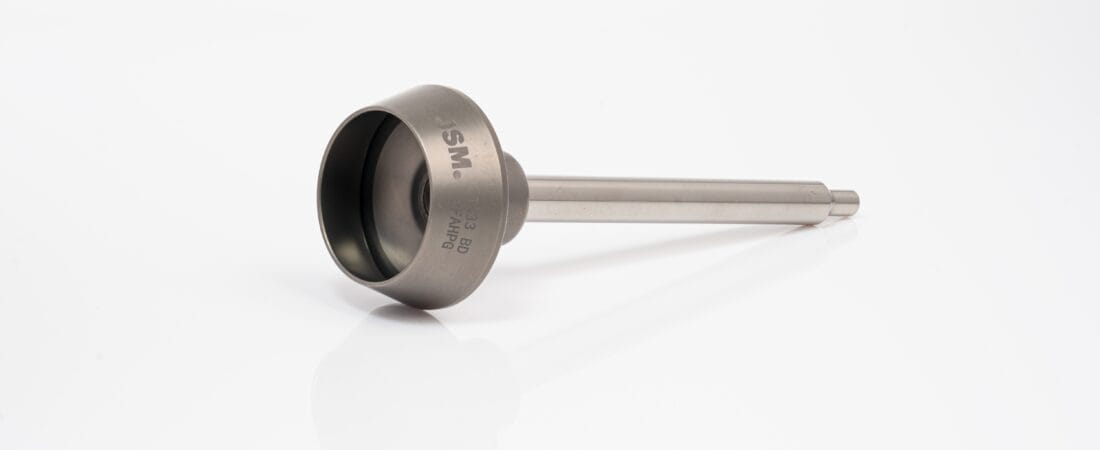
33mm or 36mm Rotor? The Complete Diameter Match Guide
31mm, 33mm, 36mm, 40mm, 46mm — the diameter is the single most consequential decision in rotor cup selection. It determines your achievable yarn count, maximum production speed, and the fiber types you can run. Choose wrong, and you’ll fight yarn quality issues for the life of the rotor.
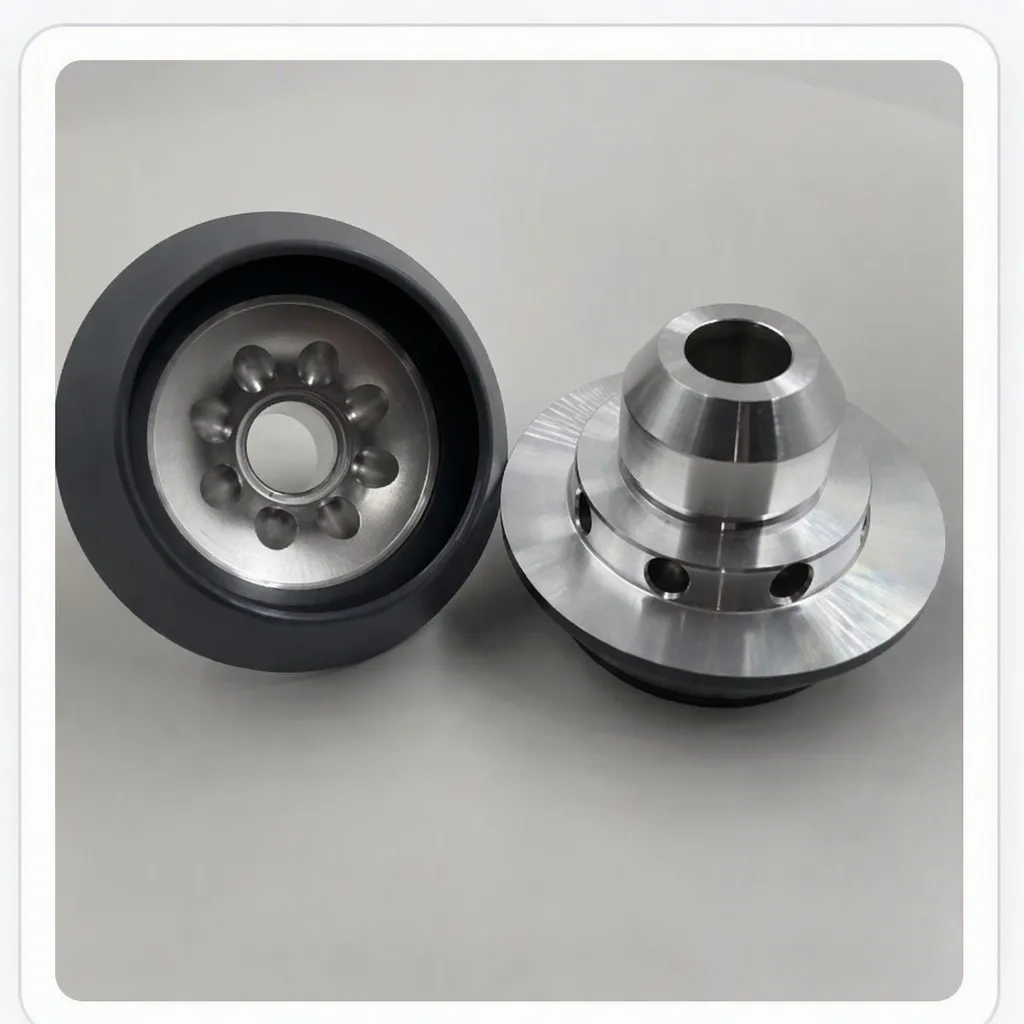
Why Diameter Is the #1 Decision in Rotor Cup Selection
Before groove type, before coating, before speed — determine the diameter first. The rotor diameter is a structural constraint: it defines the physical space available for fiber collection, the centrifugal force at a given rpm, and the maximum fiber length the rotor can handle without wrapper fibers dominating yarn structure.
Here’s the physics in plain terms:
Smaller Diameter (31–33mm)
- Lower centrifugal force at same rpm → gentler fiber treatment
- Higher practical rpm ceiling → more production speed for fine counts
- Narrower groove circumference → fewer fibers per revolution → fine yarns only
- Shorter fiber path → less wrapper fiber formation
Larger Diameter (40–46mm)
- Higher centrifugal force → better trash ejection → good for dirty/recycled fiber
- Lower rpm ceiling → less production speed, but not a problem for coarse counts
- Wider groove circumference → more fibers per revolution → coarse yarns
- Longer fiber path → more wrapper fiber risk with long staple fibers
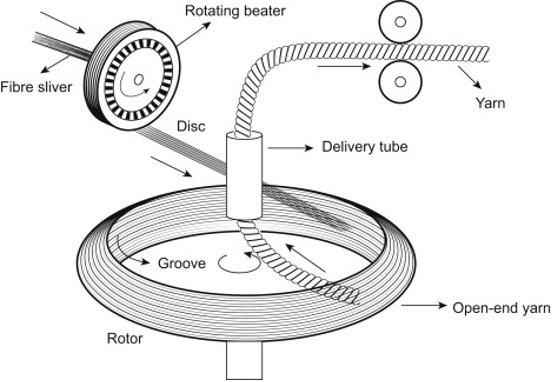
Complete Diameter Reference Table
This is the table most buyers bookmark. It maps every standard diameter to its operational window:
| Diameter (mm) | Yarn Count (Ne) | Max Speed (rpm) | Recommended Speed | Groove Circumference | Best Fiber Match | Typical Products |
|---|---|---|---|---|---|---|
| 31 | Ne 30 – 40+ | 150,000 | 120K – 140K | ~97 mm | Cotton (fine & long staple) | Fine knit T-shirts, shirting fabric, high-end jersey |
| 33 | Ne 24 – 36 | 140,000 | 110K – 130K | ~104 mm | Cotton, Cotton/Poly fine blends | Medium-fine knit, lightweight woven, underwear |
| 36 | Ne 16 – 30 | 120,000 | 95K – 110K | ~113 mm | Cotton, Polyester, Viscose | ⭐ T-shirts, sheeting, terry towels (≈60% of global OE yarn) |
| 40 | Ne 10 – 20 | 105,000 | 80K – 95K | ~126 mm | Cotton, Cotton/Poly, Recycled blends | Denim weft, workwear, sweatshirt fleece, towels |
| 46 | Ne 3 – 10 | 85,000 | 60K – 80K | ~144 mm | Recycled cotton, coarse cotton, waste fiber | Heavy denim, carpet backing, cleaning cloths, mop yarn |
📥 Download: Rotor Diameter Quick-Reference Card (PDF)
A one-page printable card with all 5 diameters, their yarn count windows, speed recommendations, and machine compatibility — keep it on your desk or phone.
Instant download. We’ll also send a bonus rotor diameter × machine model compatibility matrix.
Deep Dive: Each Diameter in Detail
31 mm — The Fine-Yarn Specialist
The smallest standard diameter in production use. Designed exclusively for fine yarns (Ne 30 and above). Its compact groove circumference (~97mm) limits fiber volume per revolution, which paradoxically is its advantage: fewer fibers in the groove = better individual fiber alignment = superior yarn evenness at fine counts.
Key application: High-end T-shirt knits, shirting fabric, lightweight jersey — anywhere the fabric surface must be perfectly uniform without visible thick-thin variations.
Important: Not all machines support 31mm. Primarily Rieter R35/R36/R37/R60/R66/R70. Older Schlafhorst SE7/SE8 spin boxes may not accommodate this diameter. Check your machine manual.
33 mm — The Fine-to-Medium Bridge
The most widely supported small diameter — fits virtually every machine platform from Rieter to Schlafhorst to Saurer to Taitan. Slightly more fiber capacity than 31mm (~104mm groove), making it more forgiving on card sliver quality variations.
Key application: Medium-fine knitted fabrics, lightweight woven goods, underwear, and polo shirts. The sweet spot for mills producing Ne 28–32 for the mainstream apparel market.
Pro tip: If you’re spinning Ne 28–32 and considering both 33mm and 36mm, the 33mm will deliver lower hairiness and better twist penetration. Go 36mm only if sliver quality is inconsistent.
36 mm — The Universal Workhorse ⭐
The most commonly used diameter in the world. ~113mm groove circumference provides enough fiber capacity for counts Ne 16–30 while maintaining acceptable speed and torque characteristics. This diameter alone accounts for roughly 60% of all rotor-spun yarn by volume because it covers the core market: T-shirts, sheeting, and terry towels.
Key application: The universal default — if you’re buying rotors for a new mill and don’t know the exact yarn program yet, start with 36mm. It runs cotton, polyester, viscose, and light blends with standard coatings.
Machine fit: Every machine brand and generation supports 36mm. Rieter R20–R70, Schlafhorst SE7–AC11, Saurer BD 448–BD 8, Taitan TQF all series.

40 mm — The Denim & Workwear Specialist
The go-to diameter for denim weft yarns and workwear fabrics. At ~126mm groove circumference, it holds significantly more fiber per revolution, making it suitable for counts Ne 10–20 where the higher mass throughput requires more groove capacity.
Key application: Denim (weft yarn), sweatshirt fleece, heavy towels, industrial fabrics, and medium-weight workwear. Also widely used for cotton/polyester blended yarns in the Ne 14–18 range.
Speed note: At 105,000 rpm max, the 40mm rotor has ~20% lower top speed than the 36mm — but for Ne 10–20 yarns, production speed is limited by twist requirements, not rotor rpm. The larger diameter doesn’t bottleneck output on these counts.
46 mm — The Coarse-Yarn & Recycled-Fiber Specialist
The largest standard diameter. Its massive ~144mm groove circumference accommodates the high fiber throughput required for coarse counts (Ne 3–10) and tolerates the impurities, short fibers, and irregular length distribution typical of recycled cotton and textile waste.
Key application: Heavy denim (warp + weft), carpet backing yarns, cleaning cloths, mop yarn, industrial wiping rags, and recycled-fiber yarns. Large centrifugal force helps eject trash particles — critical for recycled material with high impurity content.
Coating is critical here: Recycled fiber is 2–3× more abrasive than virgin cotton. DN Diamond coating at HV 10,000 is strongly recommended. Hard chrome rotors in this diameter will fail within 6–8 months on recycled material.
Diameter + Fiber + Groove: The Full Matrix
The diameter decision doesn’t exist in isolation. It must be paired with the right groove type and coating. Here’s the complete matrix:
| Diameter | Cotton | Polyester | Viscose | Recycled Cotton |
|---|---|---|---|---|
| 31 mm | G / V + Diamond | — (not recommended) | — (not recommended) | — (not recommended) |
| 33 mm | T / V + Diamond | V + Diamond (Ne 28–36 only) | U + Ceramic (limited) | — (not recommended) |
| 36 mm | T / U / G + Diamond | V + Diamond or DN-Ni | U + Ceramic | U + Diamond (light blends only) |
| 40 mm | U / GT + Diamond | U + Diamond or Hard Chrome | U + Ceramic | GT / U + Diamond (DN) |
| 46 mm | GT / U + Diamond | U + Diamond (coarse only) | — (rarely used) | GT + Diamond HV 10K ⭐ |
📖 Groove type deep dive → | 📖 Coating comparison →
Not sure which diameter your machine supports?
Send us your machine model — we’ll reply with the supported diameter range and recommended rotor specs for your yarn program.
The Diameter–Speed Trade-Off
Larger rotors can’t spin as fast — but they don’t need to. Here’s why the “faster is better” mindset is wrong:
🧮 The Twist Math
Yarn delivery speed (m/min) = Rotor rpm ÷ Required TPM (turns per meter). A 46mm rotor at 75,000 rpm spinning Ne 6 (with ~400 TPM) delivers 187 m/min of yarn. A 31mm rotor at 140,000 rpm spinning Ne 36 (with ~1,100 TPM) delivers just 127 m/min.
Coarse yarns need fewer twists per meter, so the lower rotor rpm of larger diameters doesn’t hurt output. The math works in your favor.
⚡ The Energy Math
Power draw increases cubically with rotor speed. Running a 36mm rotor at 120,000 rpm (max) instead of 105,000 rpm (recommended) increases power consumption by ~50% — for a ~14% gain in delivery speed that may not even be usable if twist requirements don’t allow it.
Diameter matters here: larger rotors have higher moment of inertia, making the cubic power penalty even steeper.
Diameter Compatibility by Machine Brand
| Machine Brand | 31mm | 33mm | 36mm | 40mm | 46mm |
|---|---|---|---|---|---|
| Rieter R20–R70, BT923 | ✅ R35+ | ✅ All | ✅ All | ✅ All | ✅ All |
| Schlafhorst Autocoro SE7–12 | ⚠️ SE9+ | ✅ All | ✅ All | ✅ All | ✅ SE9+ |
| Schlafhorst Autocoro 8–11 | ✅ All | ✅ All | ✅ All | ✅ All | ✅ All |
| Saurer BD 6–8, BD 448/480 | — | ✅ All | ✅ All | ✅ All | ✅ All |
| Taitan TQF268/368/568 | ⚠️ TQF568 | ✅ All | ✅ All | ✅ All | ✅ TQF568 |
| Jingwei / Rifa JWF/RF | — | ✅ All | ✅ All | ✅ All | ✅ Select models |
✅ = fully supported ⚠️ = specific models/generations only — = not supported. Always verify with your machine manual or spin box specification.
Decision Flow: Pick Your Diameter in 3 Questions
- What yarn count (Ne) are you spinning?
→ That narrows you to 1 or 2 diameters from the master table above. - What machine model and generation are you running?
→ Cross-check with the compatibility table to eliminate unsupported sizes. - What fiber type? Virgin or recycled? Any plans to change fiber in the next 12 months?
→ If you might switch between cotton and recycled, choose a diameter that handles both (40mm or 46mm). If you’re exclusively fine cotton, lock in 33mm or 36mm.
Need Help Selecting the Right Diameter?
Tell us your machine model + target yarn count + fiber type — we’ll recommend the exact rotor diameter, groove type, and coating specification within 24 hours.