
When CAITME 2026 opens at the Uzexpocentre in Tashkent on 8–10 September, it will do so in the middle of one of Central Asia’s most ambitious industrial transformations. Uzbekistan has ended raw cotton exports, is pushing its textile sector up the value chain, and is spending record sums on new capacity. For rotor spinning mills — and for the suppliers who keep them running — the market has never been more promising, or more demanding. This guide explains what is actually happening in Uzbekistan’s textile market in 2026, what it means for your mill, and how to source the OE-grade rotor spinning spare parts that protect your uptime and your margins.
The Numbers Behind the Momentum
The scale of Uzbekistan’s textile sector is often underestimated. According to the U.S. Department of Agriculture’s May 2026 Cotton and Products Annual, the industry is built on 134 cotton-textile clusters employing 623,000 workers — a vertically integrated structure in which clusters farm cotton, gin it, spin it, and increasingly weave, knit and sew it.
Three structural facts stand out:
- All domestic cotton is now processed locally. Raw lint exports have effectively ceased under a government policy of 100 percent domestic processing. Uzbekistan produced an estimated 750,000 metric tons of cotton lint in MY 2025/26, with a 2026/27 forecast of 780,000 MT.
- Installed spinning capacity exceeds domestic cotton supply. Domestic mills consume roughly 880,000 MT of lint per year, which means Uzbekistan now imports about 50,000 MT of lint annually from Azerbaijan, Tajikistan and Turkmenistan just to keep its spindles running.
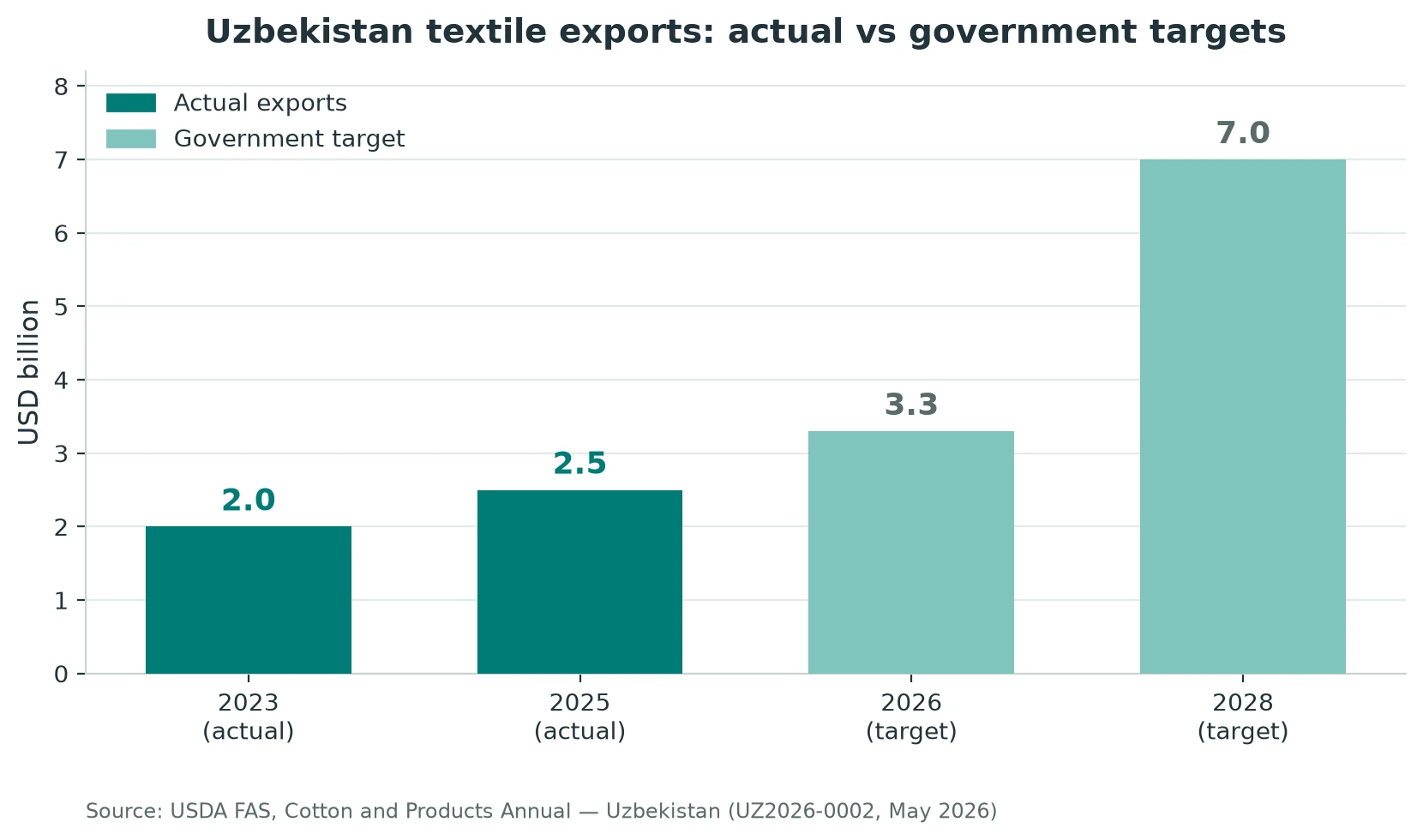
- The export engine is shifting from yarn to fabric and garments. Textile exports grew from about USD 2.0 billion in 2023 to approximately USD 2.5 billion in 2025, and the government targets USD 3.3 billion by the end of 2026 and USD 7 billion by 2028 — backed by up to 70 percent transport-cost reimbursement for fabric, knitwear and garment exports to Europe and North America.
For anyone selling into this market, the direction of travel is clear: Uzbekistan is no longer a cotton exporter. It is a spinning and textile manufacturing country — and that is exactly the kind of market where precision spare parts become a strategic purchase.
Three Forces Reshaping Mill Economics — and Why Spare Parts Matter More Than Ever
1. Rising energy costs put every kilowatt under scrutiny
Electricity tariffs for industry rose 52.5 percent in May 2024 and are scheduled for further annual increases of up to 10 percent from May 2026, as the government phases out energy subsidies by 2028. Energy is one of the largest controllable cost lines in open-end spinning. What many mills overlook is that worn process parts quietly raise energy consumption: a rotor cup or combing roller that has lost its surface quality forces the machine to work harder to maintain yarn quality, drawing more power and producing more faults. When electricity gets more expensive, the payback on replacing worn parts gets shorter.
2. The yarn-export levy is forcing a cost-and-quality squeeze
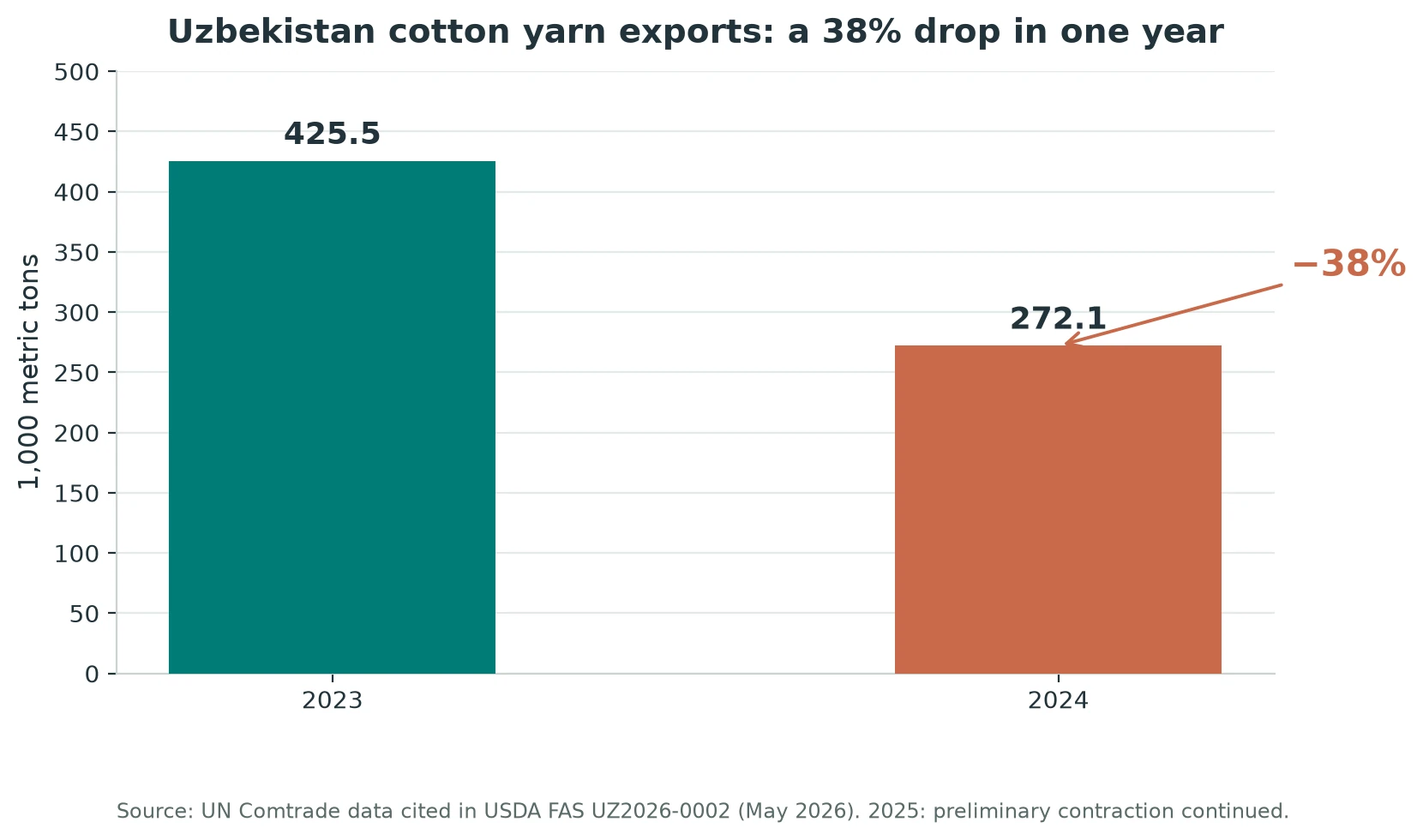
Since January 2025, Uzbekistan has applied an escalating export levy of USD 0.20 per kilogram on cotton yarn, deliberately steering the industry downstream. The effect on yarn trade has been dramatic: cotton yarn exports fell from 425,511 MT in 2023 to 272,064 MT in 2024, a 38 percent contraction across all major markets (China −41%, Türkiye −35%, Russia −27%). Mills that continue to sell yarn must now win on cost per kilogram and consistent quality — both of which depend directly on spinning geometry, part condition and maintenance discipline. Mills moving into weaving and knitting need stable yarn supply with predictable quality; that pressure flows straight back to the spinning room.
3. Capacity utilization sits near 70 percent — upgrading is cheaper than replacing
USDA estimates effective capacity utilization at around 70 percent, with legacy equipment operating below optimum. In practical terms, many mills own more spindles than they effectively run — and a large share of the gap is maintenance and parts related. Replacing a complete rotor spinning machine is a capital decision measured in years; replacing rotor cups, combing rollers and bearings is a decision measured in days, and the quality gain can be immediate. For mills under pressure to lift output without new capex, high-performance spare parts are the fastest lever available.
The Premium-Yarn Opportunity — Where OE Spinning Is Headed
Uzbekistan’s move upmarket is not only about policy; it is about fiber. Under a bilateral commitment made at the C5+1 Summit, Uzbekistan is purchasing 100,000 metric tons of U.S. cotton over three years — extra-long staple and Pima varieties that unlock premium yarn grades, BCI and organic certification, and access to EU and U.S. retail supply chains.
Premium fiber demands premium spinning discipline. This is where rotor (open-end) spinning earns its place: OE technology already dominates coarse-to-medium count production for denim, towels and knits, and modern rotor cups — with the correct groove geometry for the target count — deliver the consistency that premium buyers audit. New capacity announced for 2026 includes 207,000 MT of synthetic and blended yarn, which is a direct signal that blended and man-made fibre spinning is growing faster than cotton-only spinning; mills will need clothing, groove types and coatings matched to polyester, viscose and blend processing, not just cotton.
There is also a logistics advantage few suppliers fully exploit: Uzbekistan exports by overland rail and is largely insulated from the sea-route disruptions that have pushed up freight costs for competitors such as India. For spare parts buyers, that same logic works in reverse — land-bridge freight from China keeps replenishment predictable, a decisive factor when a mill’s production line depends on a steady supply of consumable process parts.
What to Look for When Sourcing OE Rotor Spinning Spare Parts
Whether you are a spinning mill in Tashkent or Fergana, or a parts distributor serving the region, the same questions decide whether a supplier is worth your time:
- Drop-in fit. Are parts manufactured to OEM-grade tolerances so they install without rework? A part that needs adjustment on the line costs more than it saves.
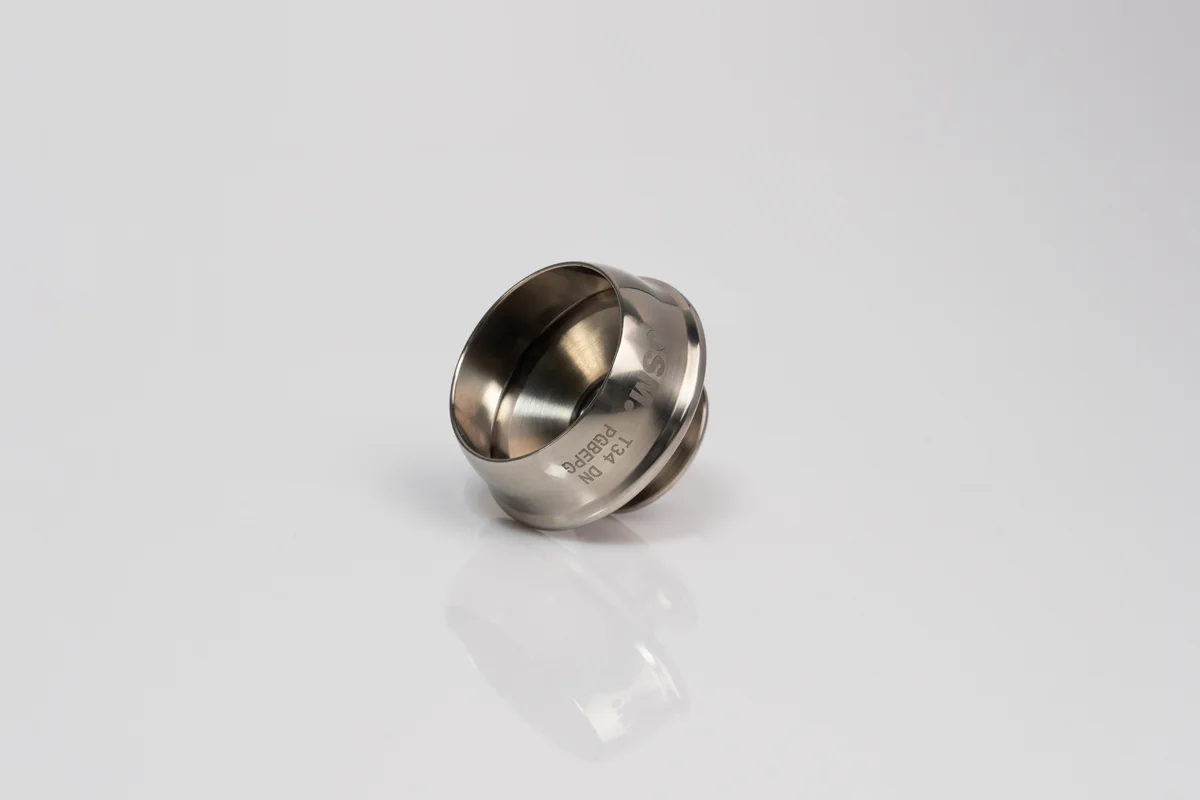
- Measured performance, not adjectives. When a supplier claims “long life,” ask for the engineering basis. For coated parts, surface hardness is the number that matters — JSM’s diamond (DN) coated rotor cups are specified at 1000–1200 HV, engineered for rotor speeds of 60,000–120,000 rpm.
- Machine compatibility. A credible supplier should be able to match parts to your exact machine family — Schlafhorst Autocoro (SE7–SE20), Rieter (R20, R40, R60, R66), Saurer BD series, as well as Taitan, Jingwei and Rifa — and to tell you honestly which items are original-stock and which are sourced from partner suppliers.
- Batch-to-batch consistency. In rotor spinning, a silent quality shift in a spare part shows up as a change in yarn faults and breakage rates. Consistency of CNC tolerances and coating quality across batches is what keeps your yarn count and strength stable.
- Total cost of ownership. The cheapest part is rarely the least expensive one. Count the change frequency, the downtime, the energy penalty and the yarn-quality risk — then compare.
- Responsive support. When a part fails or a machine series changes, you need answers in hours, not weeks. A supplier that responds to inquiries within 24 hours and understands rotor dynamics is a partner, not a vendor.
Meet JSM at CAITME 2026 — Booth H4 K46
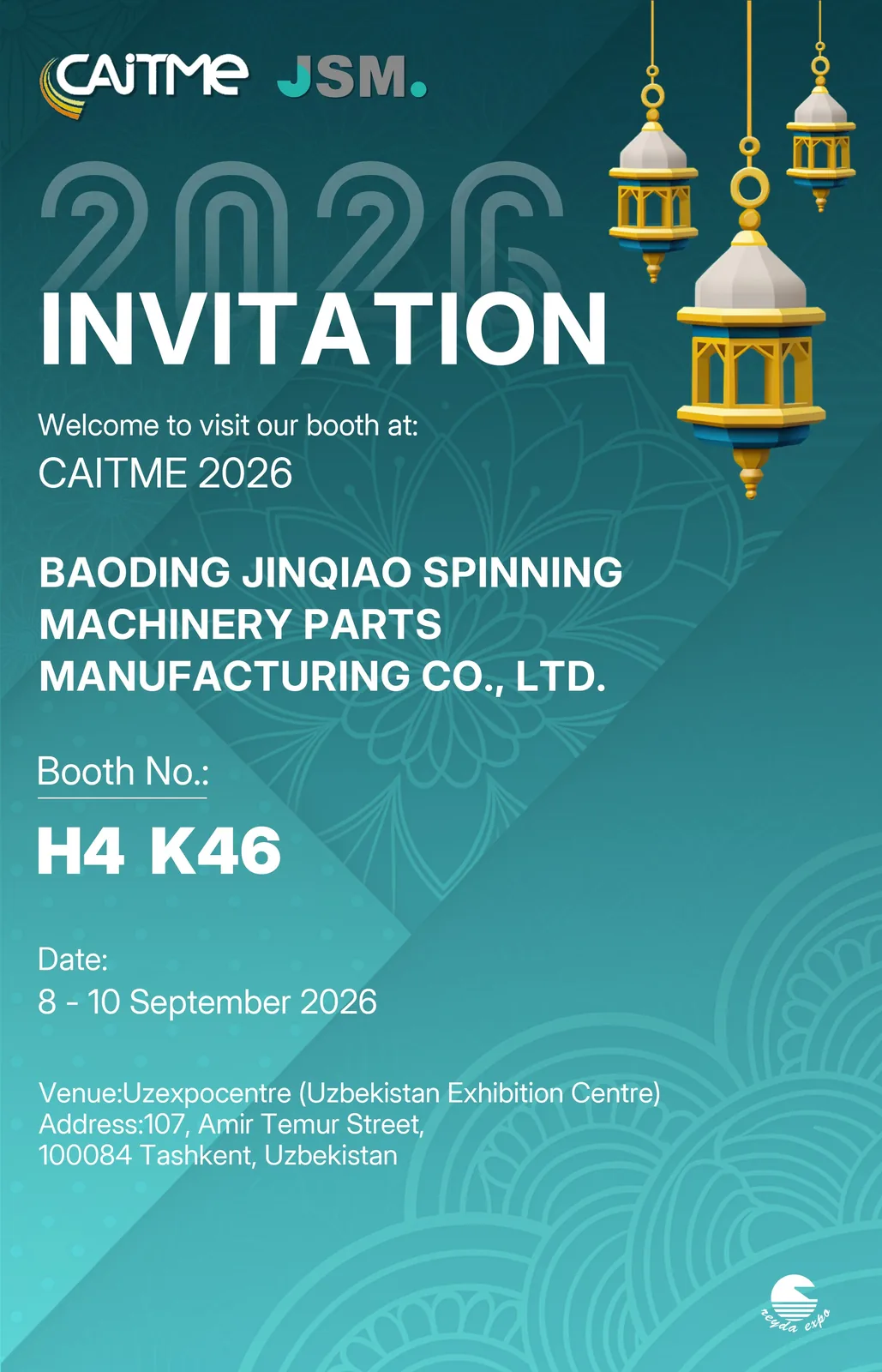
JSM (Baoding Jinqiao Textile Machinery Parts Manufacturing Co., Ltd.) will exhibit at CAITME 2026 — Booth H4 K46, Uzexpocentre, 107 Amir Temur Street, Tashkent, 8–10 September 2026.
As a manufacturer with more than two decades of focused R&D in OE rotor spinning components, JSM will present:
- Rotor cups and rotor completes — including DN diamond-coated series (1000–1200 HV) engineered for high-speed, low-fault spinning
- Combing (opening) rollers with metallic card clothing — for efficient fibre opening and stable sliver quality
- Solid rings and rotor spindles — precision components matched to machine-specific dimensions
- Rotor bearings — built for sustained operation at 60,000–120,000 rpm
Every part is manufactured to OEM-grade tolerances, with full-machine compatibility across Schlafhorst Autocoro, Rieter, Saurer, Taitan, Jingwei and Rifa equipment. And because JSM is itself an OEM/ODM supplier to several of these machine builders, customers get the engineering depth of an original-equipment partner at the cost position of an independent manufacturer.
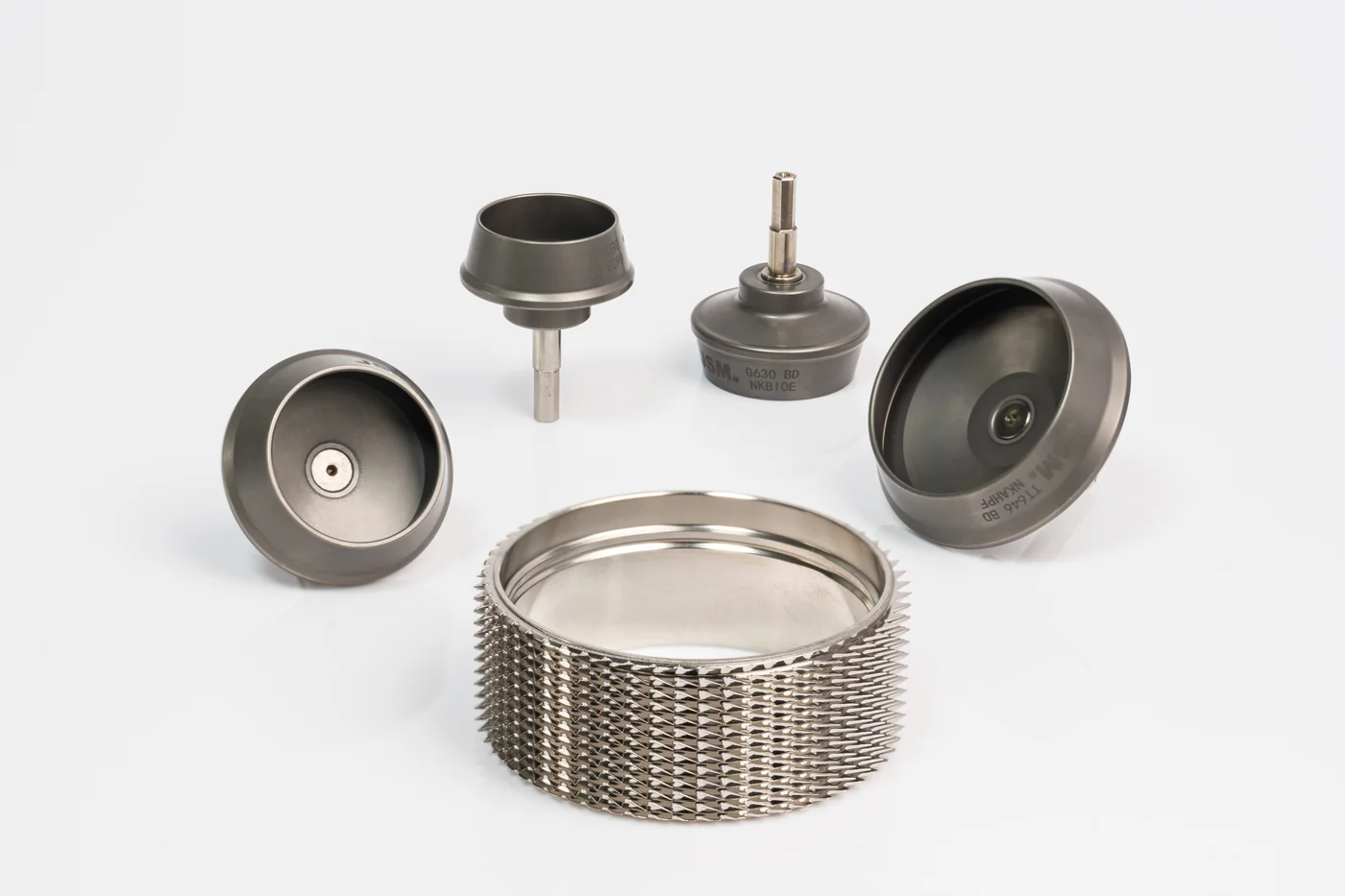
Bring your worn part to Booth H4 K46. Our engineers will identify it on the spot, compare its wear pattern against our reference library, and recommend the right replacement and coating for your fibre and count range — no obligation, just straight technical answers.
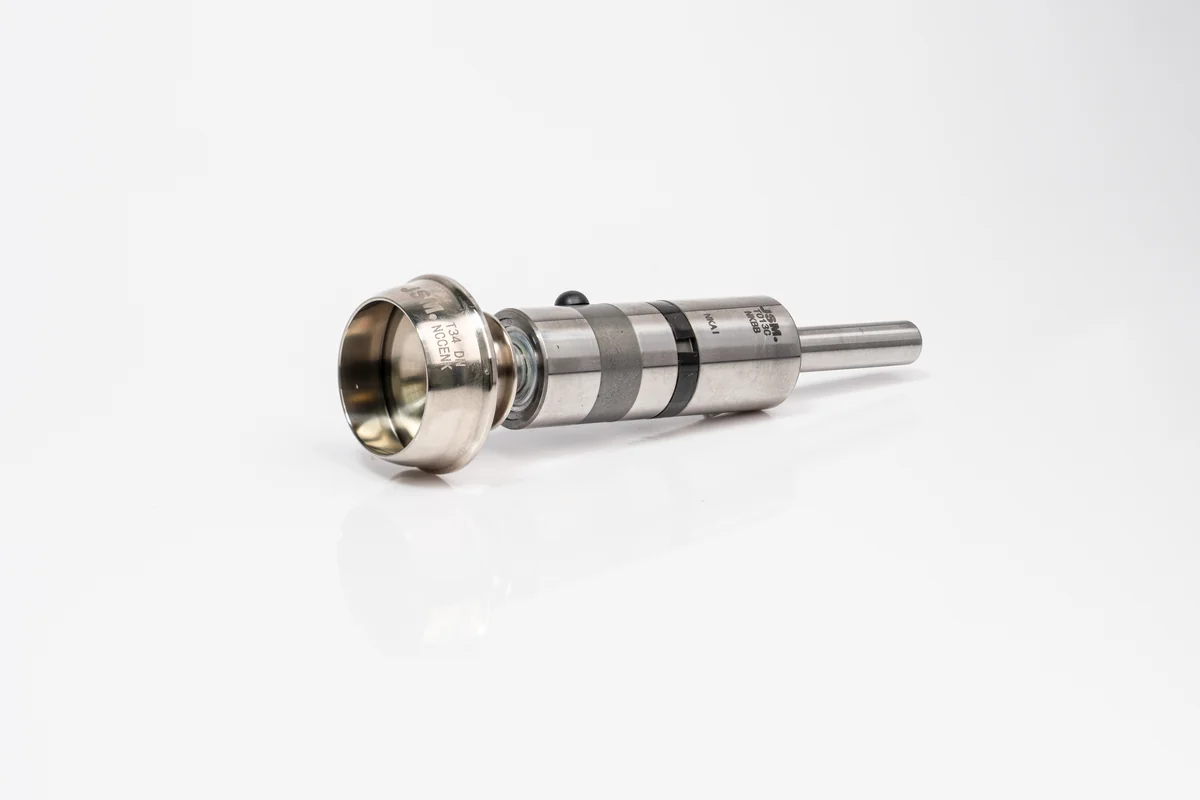
If you cannot attend the show, JSM responds to inquiries within 24 hours:
- Email: leo@jsmspinning.com
- WhatsApp / WeChat: +86-13180048511
- Website: www.jsmspinning.com
Sources and Data Notes
Market figures in this article are drawn from the USDA Foreign Agricultural Service Cotton and Products Annual — Uzbekistan, Report UZ2026-0002 (May 2026), Uzbekistan government program targets cited therein, and UN Comtrade yarn trade statistics (2024). Event details per the official CAITME 2026 organizer. Figures current as of September 2026; market conditions can change quickly — verify current terms before making investment decisions.